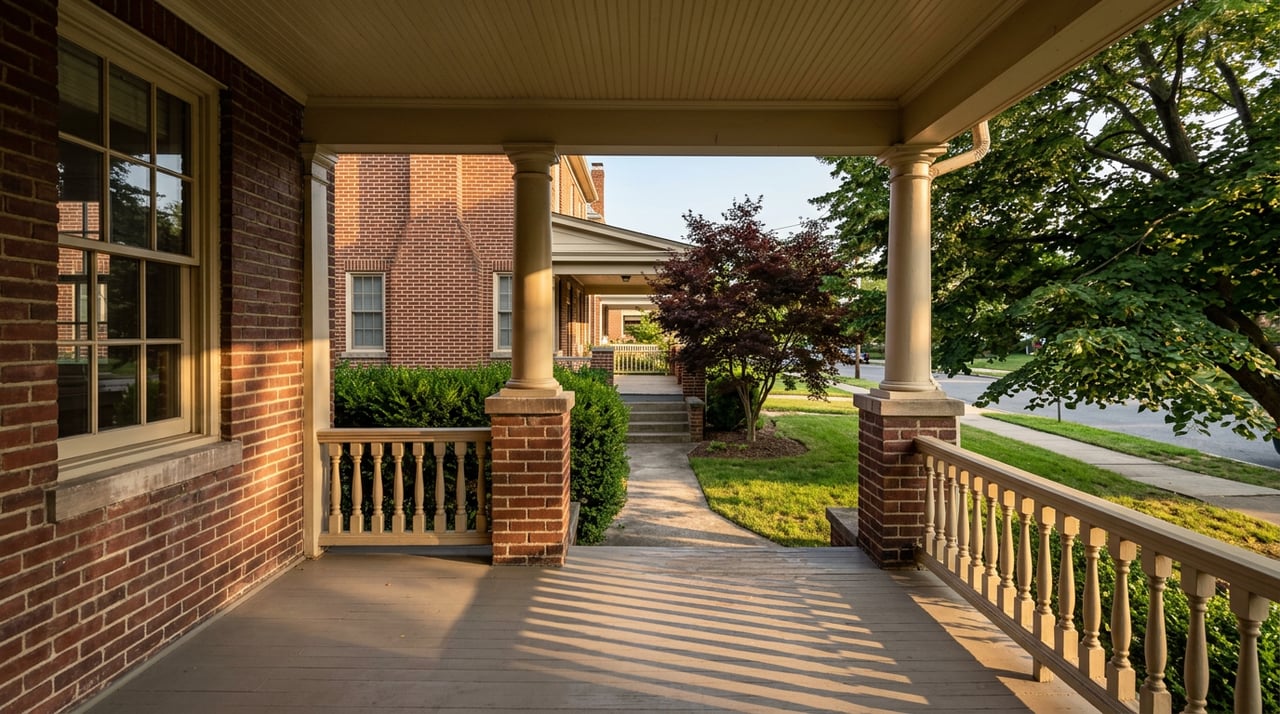
Living in Mt. Lebanon means choosing one of the most consistently in-demand communities in the greater Pittsburgh metro, and the families who move here tend to plant roots. That's not marketing language; it's what the transaction data shows year after year. Owner-occupancy rates stay high, and turnover is low compared to most Allegheny County suburbs.
What most buyers don't realize is that "Mt. Lebanon" isn't one thing. It's a 6.2-square-mile township with 23 recognized neighborhoods, each with a distinct character, price range, and practical tradeoff. Virginia Manor feels different from Sunset Hills. Twin Hills is not the same as Beverly Heights. Knowing which section fits your life matters far more than knowing the township name. That hyperlocal specificity is exactly what The Bingham Team focuses on: helping buyers find the right section, not just the right suburb.
Housing Costs When Living in Mt. Lebanon
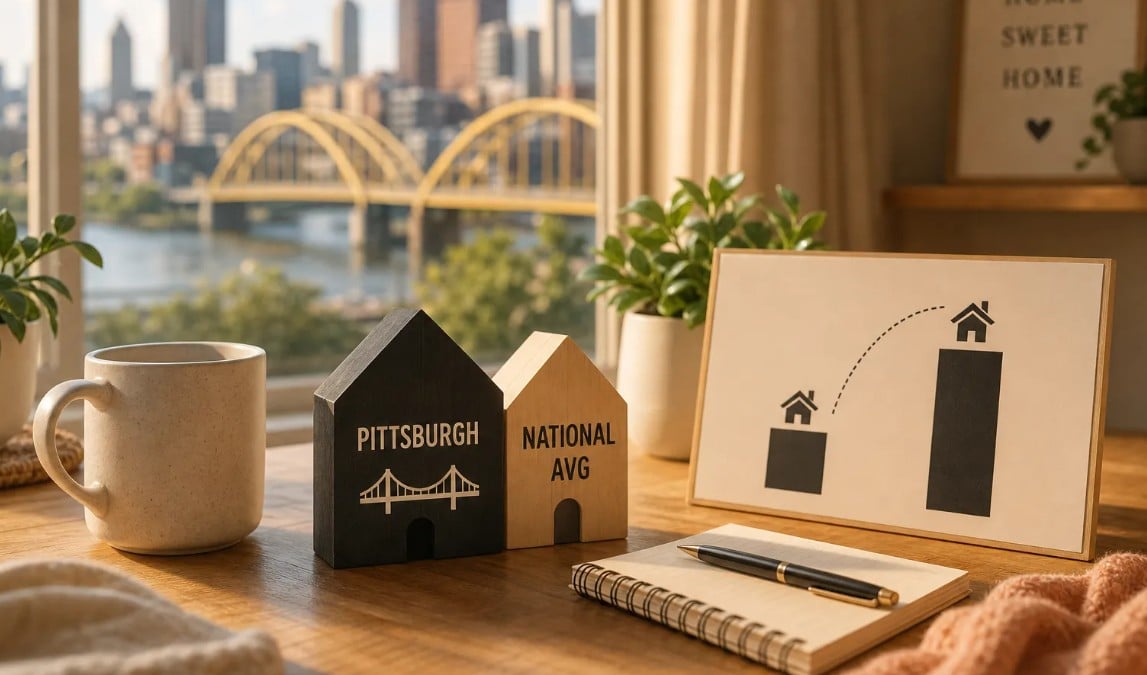
The median sale price in the township runs between $340,000 and $385,000 in 2026 (based on current MLS transaction data, with a recent three-month median near $387,000), but that number alone misleads more buyers than it helps. The spread within those figures is wide, and location within the township drives most of it.
Virginia Manor and Sunset Hills command the highest prices. Virginia Manor was established in 1929 with deed restrictions requiring private architects and minimum lot sizes, which is why homes there still carry premium pricing. At the other end, homes closer to the Dormont border or those needing cosmetic updates typically sell in the $280,000 to $330,000 range. The gap between a turn-key home in the desirable core sections and a dated home near the edge of the township can easily reach $80,000 to $100,000.
Speed matters just as much as price. Well-priced, move-in-ready homes here regularly receive multiple offers within the first weekend and close in 7 to 14 days, according to 2026 days-on-market data. Overpriced or cosmetically tired homes can sit 45 to 90 days. The practical takeaway: get pre-approved before you fall in love with a listing. The homes worth buying don't wait.
The School District: The Top Reason Families Move Here
Mt. Lebanon School District earns an A+ grade, and these are state assessment results, not marketing claims. The district posts 83% reading proficiency, 74% math proficiency, and a 98% graduation rate (Pennsylvania Department of Education, 2023, 24 PSSA/Keystone data). Mt. Lebanon High School ranks among Pennsylvania's top high schools, and both middle schools sit in the top 1% statewide. All seven elementary schools rank in the top 5% statewide. For a concise third-party summary, see the U.S. News Mt. Lebanon district profile.
The college-readiness numbers are equally solid: an average SAT of 1290, an average ACT of 30, and a 15:1 student-teacher ratio (U.S. News and district-reported data, 2025, 26). Compared to neighboring South Hills suburbs, the district leads. Upper St. Clair is a legitimate second option; Bethel Park is solid for the price point (Bethel Park vs Other South Hills Suburbs). If school performance is your first filter, Mt. Lebanon is the clear answer in this part of Allegheny County.
The Commute: Driving Versus Taking the T
Commuting While Living in Mt. Lebanon
By car, the township sits roughly 6 to 7 miles from downtown Pittsburgh via US-19 and I-376 (driving distance along the typical route). Off-peak, that's a 15 to 20 minute drive. During peak morning or evening hours, the same trip can stretch to 45 minutes or more. Factor that into your math before assuming the commute is simple.
The T changes the calculation entirely. Pittsburgh Regional Transit's light rail runs directly from Mt. Lebanon Station to downtown in 20 to 25 minutes, consistently, with trains every 10 to 12 minutes during peak hours and park-and-ride available. For anyone commuting downtown five days a week, the T makes the township functionally closer than the drive distance suggests; for a third-party travel/route overview see Rome2rio's Pittsburgh to Mount-Lebanon guide. This is one of its most meaningful advantages over Upper St. Clair, which is car-dependent and adds 10 to 20 minutes to rush-hour travel without a rail option.
Daily Life When Living in Mt. Lebanon
Washington Road is the commercial spine of the township, and it earns its reputation. The Uptown district runs along Washington Road through a cluster of locally owned restaurants, coffee shops, retail, and services that residents can walk to from the core neighborhoods. Spots like Il Pizzaiolo, Jade Grille, and Orbis Caffe anchor a walkable stretch that most Pittsburgh suburbs simply can't match. Most of the South Hills requires a car for every errand. In the community's center sections, you don't. The township's official Mt. Lebanon business districts page maps this commercial spine in more detail. (Also see our deeper summary: Mt. Lebanon Daily Life: Commutes, Parks, Main Streets.)
The township runs a serious recreation infrastructure, confirmed by Mt. Lebanon Recreation Department figures: more than 200 acres of parks, a public 9-hole golf course, a 50-meter outdoor swim center, a two-sheet ice facility, 15 tennis courts, and year-round programming for kids and seniors. Discussion of recent proposals and planning for facility upgrades appears in local coverage of the new recreation center plans. The safety picture is strong as well, with a safety score of 86 out of 100 and violent crime rates well below national averages across every category.
The community fits buyers who want the feel of a walkable, established neighborhood with strong civic identity and direct city access. It suits families with school-age children, professionals who commute downtown, and buyers who value decades of proven neighborhood stability.
Who Mt. Lebanon Is Right For, and Who Should Look Elsewhere
If strong schools, a reliable Pittsburgh commute, and walkable amenities are your top priorities, Mt. Lebanon delivers on all three. The township has maintained its position in the top tier of Allegheny County communities for decades, and that consistency is rare. For broader context on regional choices, see our Best Pittsburgh suburbs for families: 2026 ranked guide. Moving to Mount Lebanon means buying into a track record, not a promise.
It's not the right fit for everyone, though. Buyers prioritizing newer construction, larger lots, or a lower entry price point will find better value in Bethel Park or parts of Peters Township. The housing stock here skews older and smaller; charm and location are the value proposition, not square footage per dollar.
If you're seriously considering living in Mt. Lebanon, the difference between neighborhoods is exactly the kind of detail that changes whether a purchase makes sense for your situation. Review the township neighborhood map before you tour, it makes the distinctions concrete. The Bingham Team works this market hands-on, with direct knowledge of what sells, what sits, and which sections fit which buyers. Call before you start touring. That conversation changes what you look at, and what you pass on. Reach out to The Bingham Team and get a straight answer based on what you actually need.